
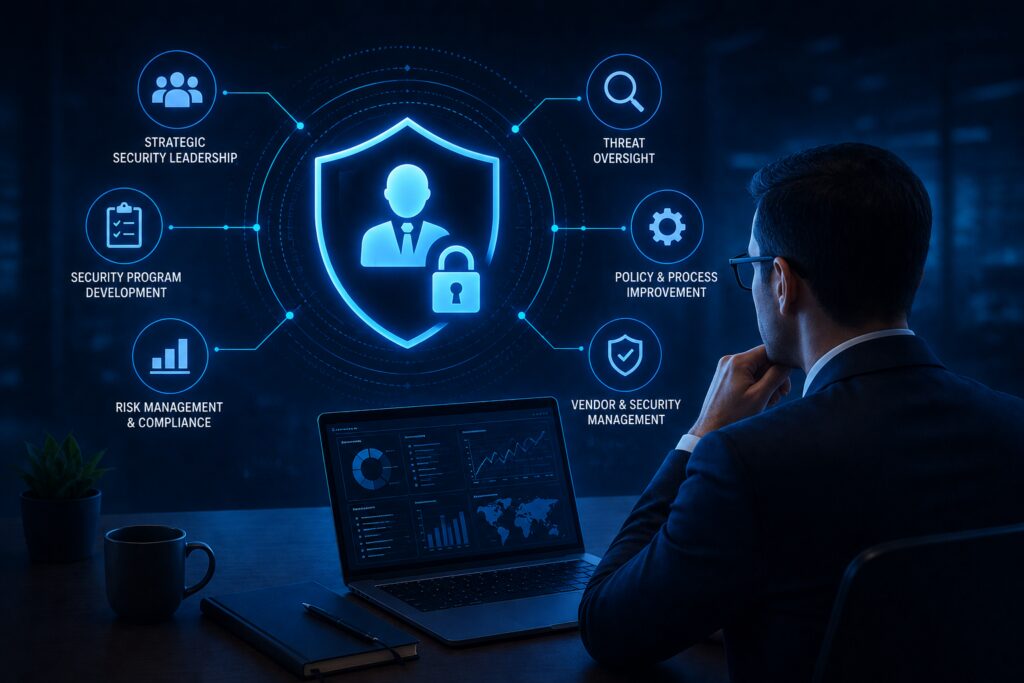


Cybersecurity issues don’t pop up one at a time. They’re often frequent, urgent, and complex.
When issues build up and the level of complexity increases to the point where your team needs an extra hand, having a vCISO can lighten the load.
A vCISO (Virtual Chief Information Security Officer) is a security leader who serves as an external advisor to businesses looking to strengthen their cybersecurity without incurring the cost of a full-time hire.
They provide their time and expertise to businesses, helping them protect their IT, build a cybersecurity strategy with the organisation, and meet compliance requirements.
This guide will cover how vCISOs work, the benefits and drawbacks of having one, and how to choose the best vCISO for your business.
How does vCISO work?
A vCISO can be a game-changer for organisations that aren’t in a position to hire a full-time security officer but still want to strengthen their cybersecurity.
They work flexibly, providing support that aligns with an organisation’s requirements, goals, and expectations.
vCISOs are designed to work with your team as an extension of your business, providing objective, expert insights and feedback on your current security strategies, risk mitigation, and overall cybersecurity posture.
What are the benefits of vCISO?
There are three big benefits to having a vCISO:
Flexible and scalable
As mentioned, your vCISO works around you. They’re there to provide the support you need while serving as a flexible external member of the team.
As they’re essentially freelancers, the level of work you require can be discussed beforehand, meaning they can be as involved as your business decides.
Cost efficient
Perfect for SMEs who require strategic direction, hiring a vCISO is a cost-efficient way to access senior cybersecurity leadership without the expense of a full-time executive.
Instead of having to cover a permanent salary, organisations can get the expertise they need when they need it most.
Faster deployment and quicker impact
Because a vCISO is flexible and does not require a lengthy onboarding process, organisations can bring them in for guidance quickly and address urgent risks sooner.
What are the drawbacks?
As with all things, there are some drawbacks to hiring a vCISO:
Remote presence
The biggest drawback, and a potential negative for some, is that often the service is delivered remotely.
Some businesses may feel that having an external member remotely can lead to dysfunctions in team communication. Check with the provider, as this isn’t always the case.
Limited internal knowledge
As an external member of the team, a virtual CISO may not be as familiar with your team and your business as a full-time, in-person CISO would be.
How to choose a vCISO provider
To hire a vCISO who’s best for your business, there are a few things to look for:
- Proven IT expertise: Make sure the vCISO you’re considering has relevant IT certifications and credentials.
- Data protection: Being aware of GDPR and data management practices is crucial for businesses. Your vCISO needs to be aware of how to handle this data.
- Strong communication: Cybersecurity decisions only work when leadership and technical teams clearly understand them. The vCISO you choose to bring in needs to be able to explain risks to business teams across the organisation’s fields.
Read more: Why people are the weakest link in cybersecurity
It’s best to choose a cybersecurity firm with the credentials and accreditations to be a strong virtual CISO provider.
Find the right partner and the right vCISO, and your business’s cybersecurity will see the improvements that you desire.
